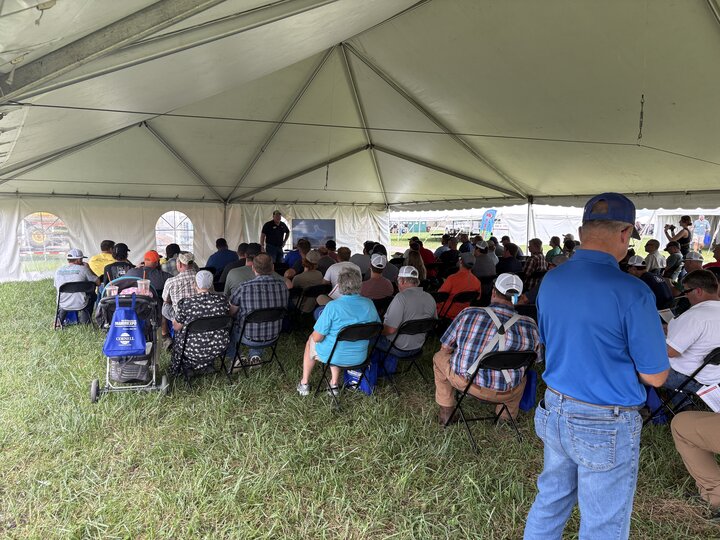
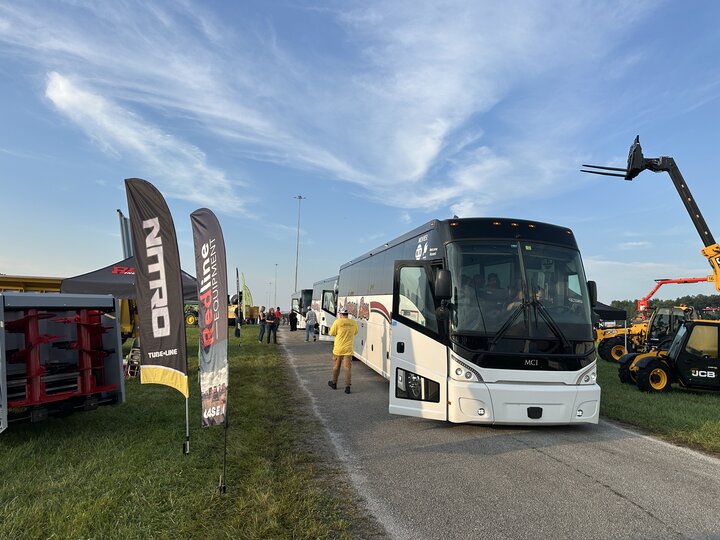
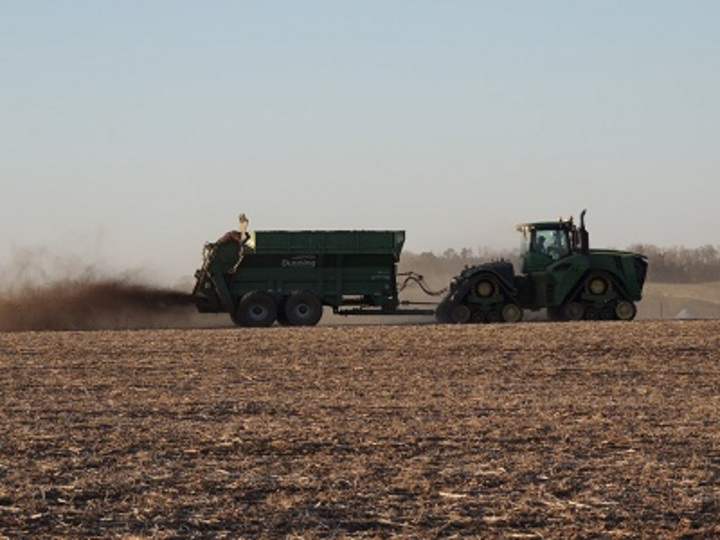
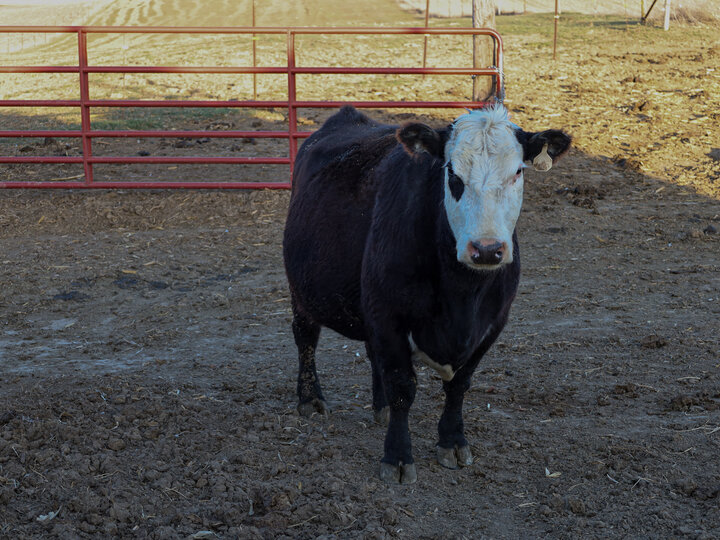
The 2026 North American Manure Expo, held July 28-30 at the Wayne County Fairgrounds in Wayne, Nebraska, was a tremendous success! Bringing together manure applicators, farmers, industry professionals, Extension/University professionals, researchers, and advocates from across North America, the Expo offered something for everyone interested in the future of manure management.
The North American Manure Expo July 28-30 at the Wayne County Fairgrounds in Wayne, NE continues to distinguish itself as one of the few events dedicated entirely to manure management, covering every step from the barn to field application. In addition to the trade show, tours, and educational sessions, a hallmark of this expo is its emphasis on live equipment demonstrations, giving producers and custom applicators the opportunity to evaluate machinery performance under real-world conditions before making purchasing decisions.
The 2026 North American Manure Expo that is being planned for Wayne, NE on July 28 through 30 is a trade show and extension program all rolled into one. It includes tours the first day and two days of trade show that also includes live demonstrations and education sessions featuring the latest science and technology related to manure handling and application. Early bird pricing ends June 30, so get your tickets now!
Educational sessions at the North American Manure Expo on July 29-30 at the Wayne County Fairgrounds will focus on practical, research-backed information for manure applicators, livestock and crop producers, crop advisers, and ag professionals. Topics include sampling, soil health, precision application, edge-of-field practices, plastics, safety, and emerging innovations like sensing crops to determine additional nutrient needs and anaerobic digestion.
Visitors to the 2026 North American Manure Expo being held at the Wayne County Fairgrounds in Wayne, Nebraska on July 28-30 will have the chance to explore some of the region’s most innovative and sustainability focused agricultural operations during the event’s official tour day on July 28, 2026. All tours will begin and end at the Wayne County Fairgrounds. Five tours, each highlighting different aspects of manure management and livestock production, as well as conservation and agricultural innovation in Nebraska have been developed. Participants will have the option of choosing one or two half-day long tours or one full-day tour. While the full day tour is the “family friendly” option, families are welcome on any of the tours. Learn more about the manure expo, the tours, and watch for registration at manureexpo.com.
This February and March, Nebraska Extension is hosting seven hands-on workshops across the state to help producers get the most value out of manure while protecting water and soil resources.
The 2026 Nutrient Management Calendars are available for pre-order from the Nebraska Extension. This easy-to-use record keeping calendar tracks manure-related records for livestock and cropping operations. It serves as a guide for livestock operations that are required by the State of Nebraska to keep records. It was designed to be used by all sizes of livestock operations and includes all records required for operations permitted for the National Pollutant Discharge Elimination System (NPDES).
If you've ever looked out over a freshly fertilized field and noticed a tangle of net wrap or a bit of old plastic poking out of the soil, you're not alone. Recent work on my own farm reminded me of something that might be bugging you too: finding plastic and other junk in livestock manure and worse, seeing it show up in the field.
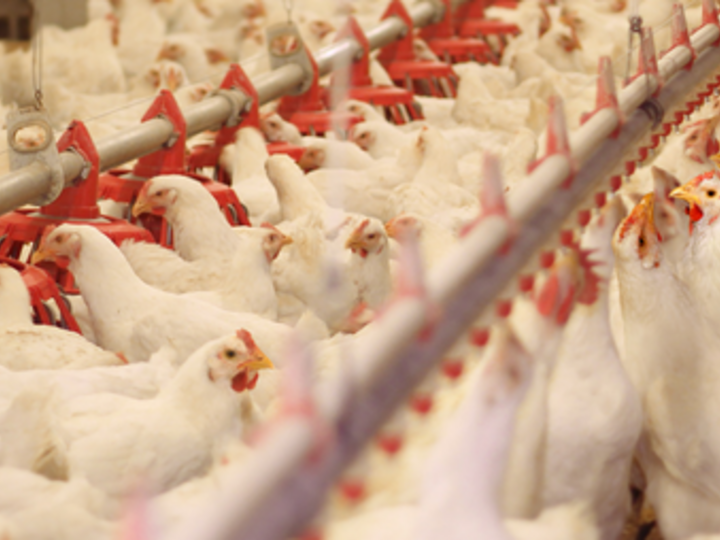
Following a Highly Pathogenic Avian Influenza (HPAI) outbreak, there may be a delay in the ability to receive manure and other products from those barns.
Manure spreaders are essential tools for distributing nutrients to crops to improve fertility and improve soil health. Therefore, achieving an even application of manure is just as important as with commercial fertilizers. Proper placement ensures that every part of a field receives the nutrients needed, leading to healthier crops and soil biology. This guide explains how to use manure spreaders effectively.
Applying manure to fields provides a natural and sustainable way to fertilize crops, reducing the need for synthetic fertilizers. It adds essential nutrients like nitrogen, phosphorus, and potassium, improving soil health and promoting plant growth. Additionally, manure enriches the soil with organic matter, enhancing its structure and water-holding capacity. However, there’s a side to manure that many don’t often think about, that is ammonia deposition. Ammonia deposition is the process by which ammonia is returned to the Earth’s surface after being released into the atmosphere.
Farmers and ranchers are becoming increasingly aware of the importance of soil quality/health to the productivity and sustainability of their agricultural system. Research and field observations have demonstrated that carefully managed manure applications can contribute to improved soil quality with limited environmental and social risks. However, a comprehensive assemblage of outputs and conclusions from research studies, field trials, soil labs databases, and other sources has never been developed.