Crop Production

The production of crops is the heart of Nebraska's economy. Water is essential to all plant growth. Thus Nebraska's economy relies on a plentiful supply of water to produce crops – in both rainfed and irrigated environments. Several factors involved with producing crops interact with either water supply or water quality issues – or both.

Soybeans to be Newest Nebraska TAPS Competition in 2024

Soybeans to be Newest Nebraska TAPS Competition in 2024

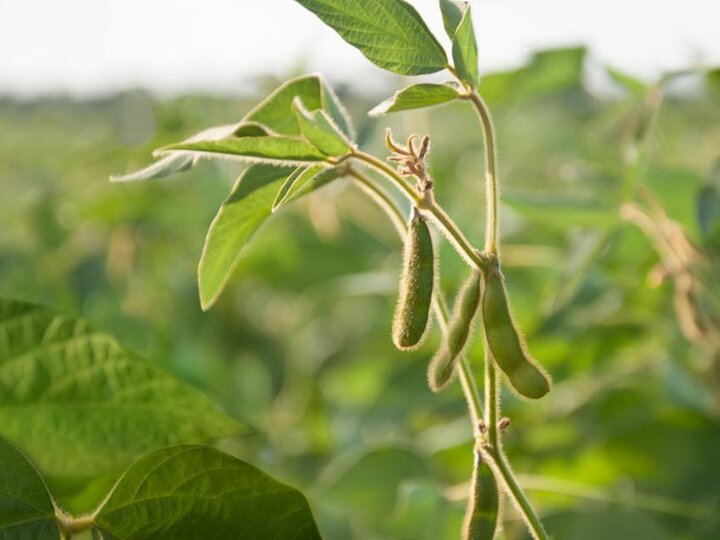
Although Nebraska is best known for the commodities of cattle and corn, soybeans land in the third-place spot among the top commodity rankings in the state, according to the Nebraska Department of Agriculture. The University of Nebraska-Lincoln (UNL) is adding soybean to the lineup of Testing Ag Performance Solutions (TAPS) farm management competitions for 2024. The new soybean competition will be facilitated at UNL’s Eastern Nebraska Research, Extension and Education Center (ENREEC) near Mead, Nebraska. The soybean competition will be supported by the Nebraska Soybean Board.
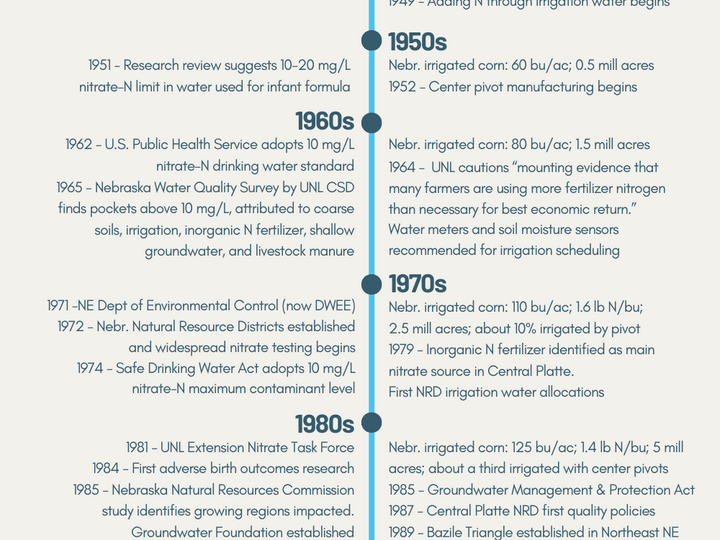
100 years of Nebraska nitrogen

100 years of Nebraska nitrogen

Nitrogen is an essential plant nutrient but increasingly found in our water. Here is a brief history:

Thompson Discusses New Nitrogen Management Tool on RFD-TV

Nebraska Extension Educator Laura Thompson shares insights on how UNL's new nitrogen tool will help farmers determine fertilizer needs for their operation and find more success in their overall farm management goals.
 Dryland Cropping Systems to be Focus of Upcoming Nebraska Soil Health School

Dryland Cropping Systems to be Focus of Upcoming Nebraska Soil Health School

The first Nebraska Soil Health School of 2024 will feature presentations on the impact of tillage, biochar and cover crops, soil health measurement and carbon markets, and more.
 Nitrogen Fertilizer Trends in Nebraska from 1955-2023

Nitrogen Fertilizer Trends in Nebraska from 1955-2023

This Nebraska Extension article highlights the impact of factors such as plant genetics and improved production practices to fertilizer consumption in Nebraska over numerous decades.
Choosing a manure application rate

Choosing a manure application rate

An often asked question is, "how much manure do I need?". The answer is not as simple as the question. It depends on the crop you are growing and the expected yield, existing soil nutrients, knowing your goals, the type of manure you wish to use, and any other fertilizer nutrients you expect to apply.
 The Impact of Spring Rainfall on Available Soil Moisture

The Impact of Spring Rainfall on Available Soil Moisture

Nebraskans in the eastern part of the state have recently experienced good rainfall during April and early May. This was a much-needed relief, especially considering the dry winter with minimal rainfall/snowfall and the dry 2023 growing season. While rainfall is always welcomed, assessing whether the received rainfall was sufficient to recharge soil moisture to adequate levels is not an easy task. This information plays a crucial role in planning the first irrigation event of the season and estimating the duration until water deficit begins to affect crops in dryland fields.
 Pasture and Forage Minute: Early Season Irrigation, Controlling Alfalfa Weevil

Pasture and Forage Minute: Early Season Irrigation, Controlling Alfalfa Weevil

Alfalfa is a tough perennial with established rooting depths down eight feet or more. Depending on deep soil profile moisture, some varieties can extend spring dormancy and survive up to 45 days without rainfall. However, forage yields drop dramatically, since alfalfa requires about six inches of root available water to produce one ton of forage per acre.
UNL Researchers Advance Soil Health Cycle Concept

UNL Researchers Advance Soil Health Cycle Concept

Inspired by an extension event survey comment, Dr. Bijesh Maharjan, associate professor and extension specialist at the University of Nebraska-Lincoln Panhandle Research, Extension and Education Center, conceptualized the soil health cycle (SHC) as an iterative soil health management cycle to achieve agricultural sustainability.
Corn and Soybean Survival in Saturated and Flooded Soils

Corn and Soybean Survival in Saturated and Flooded Soils

Several factors affect corn and soybean survival in flooded soils at early season growth stages. This Nebraska Extension article reviews considerations for growers concerned about impacts to seed germination for these crops.
 Strategies to Minimize Compaction During Wet Spring Conditions

Strategies to Minimize Compaction During Wet Spring Conditions

Insights on how wet field conditions affect compaction and ways to mitigate compaction when field work can't be delayed.
 Nebraska 4Rs Nutrient Stewardship Field Day Set for July 11

Nebraska 4Rs Nutrient Stewardship Field Day Set for July 11

This year's 4Rs Field Day will feature a demonstration on UNL's newly developed web-based N tool, designed to increase efficiency of nitrogen use, as well as ease of record-keeping.

The production of crops is the heart of Nebraska's economy. Water is essential to all plant growth. Thus Nebraska's economy relies on a plentiful supply of water to produce crops – in both rainfed and irrigated environments. Several factors involved with producing crops interact with either water supply or water quality issues – or both.