Reintroduction of Salt Creek Tiger Beetle Larvae
On the morning of April 29, 2026, conservation partners caravanned to a saline wetland just outside the city limits of Lincoln for the important conservation work of reintroducing the larvae of an endangered species, the Salt Creek tiger beetle (SCTB), back into their unique habitat - the saline wetlands and their salt flats.
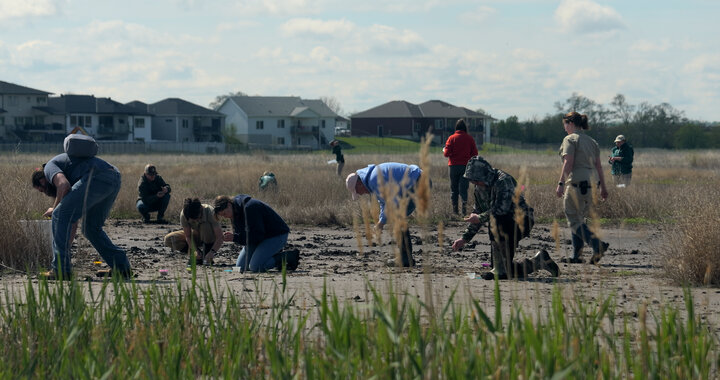
Groups donning the Omaha Henry Doorly Zoo (OHDZ) green, Lincoln Zoo navy blue, U.S. Fish and Wildlife Service navy blue, and Lower Platte South Natural Resources District (NRD) grey work apparel gathered in the parking lot interspersed by folks from the Topeka Zoo, Nebraska Game and Parks Commission (NGPC), Flatwater Group, Inc., City of Lincoln, and Nebraska Extension and the Nebraska Department of Water, Energy, and Environment.
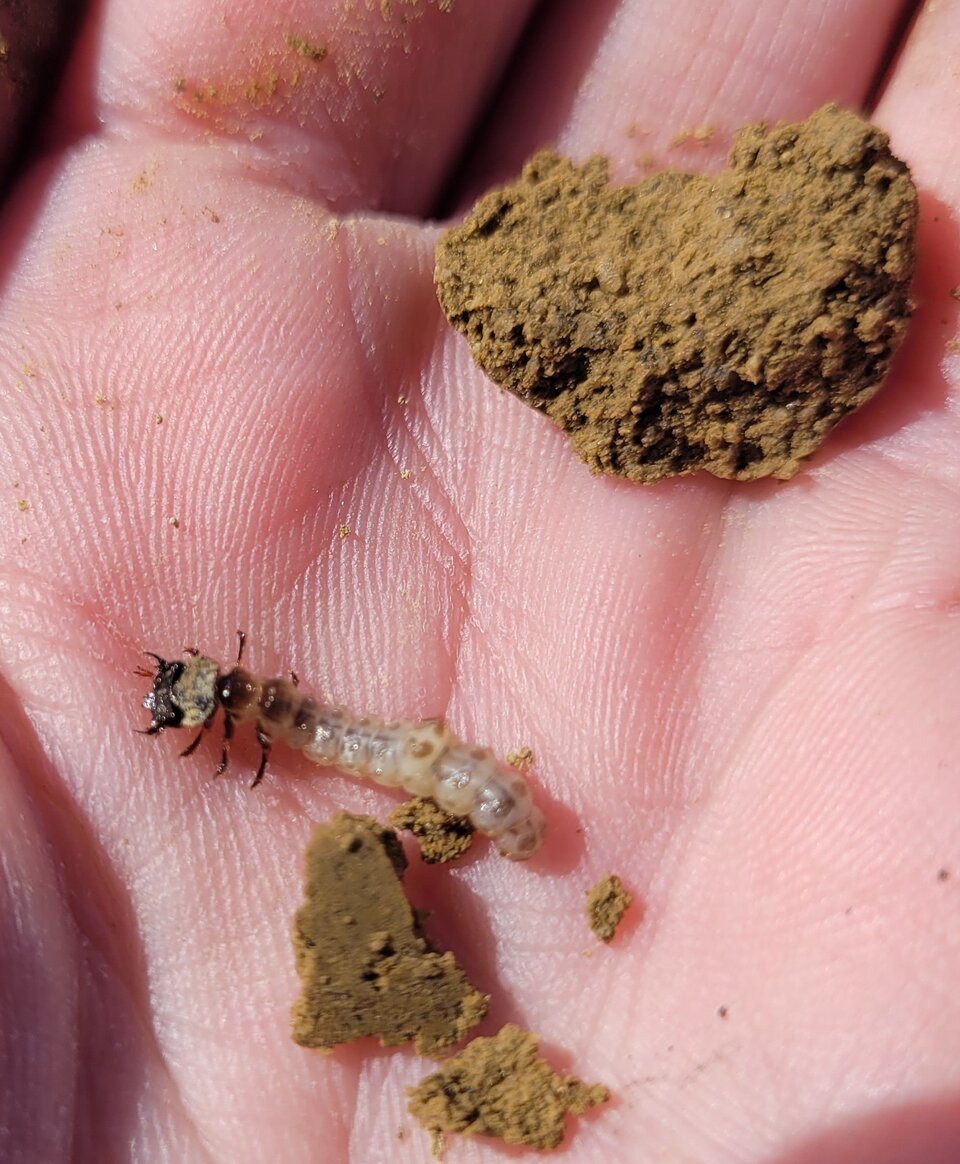
Each zoo had a storage bin that contained small, transparent Tupperware with vibrant, multi-colored lids. Inside each transparent Tupperware, there was substrate with a tiny pinprick of a hole, the burrow of a SCTB larva.
A Lincoln Zoo teammate mentioned that the larvae are ambush predators that will come out of their burrow for a tasty snack before retreating sub terra. OHDZ leads the breeding efforts of the SCTB; they are the only zoo with adult beetles. They breed the beetles and then the resulting larvae are sent to the other zoos.
Before the reintroduction began, the leaders of the release shared contextual information about the ensuing event.
Tom Malmstrom with City of Lincoln and Saline Wetlands Conservation Partnership (SWCP) welcomed the group at the overlook site and went into a bit about the history of the release program and site. The SWCP consists of the City of Lincoln, Lower Platte South NRD, NGPC, and Pheasants Forever. Prior to 2013, the site was primarily used as a waterfowl dog training area. The land was purchased by the Lower Platte South NRD in 2009 and 2012 with the assistance of the SWCP. The wetland was restored in 2017 with the assistance of the Flatwater Group, Inc.
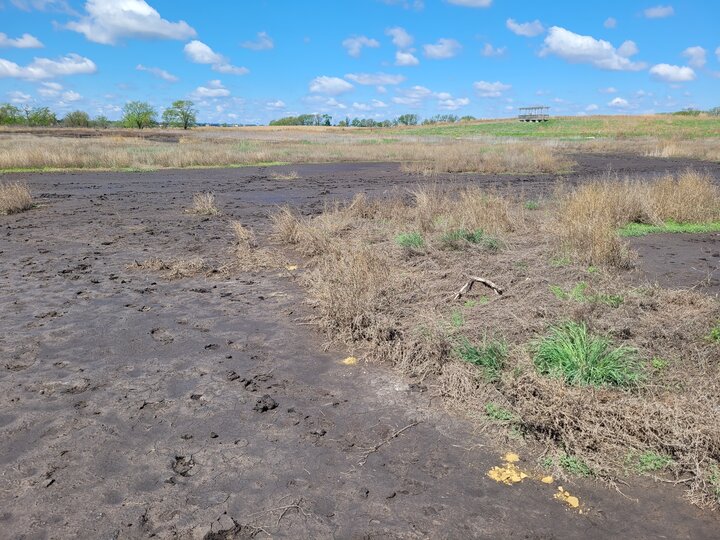
Next, Will Inselman with Lower Platte South NRD spoke about how he manages the property for waterfowl, shorebird, saline wetlands and SCTB habitat. This property is a major birding spot in Nebraska, ranking in under the top ten spots for birders to go and experience biodiversity. This site contains saline wetlands and a larger freshwater wetland on the premise. For the saline wetlands, he employs management techniques to quickly move freshwater off the area so that the salinity is not diluted. The high salinity is what makes the environment suitable for SCTBs and other organisms, like another endangered species, the plant saltwort.

Lastly, Shaun Dunn with NGPC reviewed the available materials needed to release the SCTB larvae - a paintbrush and an optional pair of tweezers for extra support. Everyone lined up to get their paintbrush and began to walk onto the salt flats. Due to the recent rains, mud clumped onto people’s footwear as we trudged on in solidarity and excitement into the salt flats.
The larvae-containing Tupperware were placed roughly one foot apart on drier areas of the salt flats and adjacent to sparse saline vegetation. First, the volunteers used the handle of their paintbrush to poke a hole into the ground, about half the width of the paintbrush. Then, each volunteer took a Tupperware container, turned it upside down and gently tapped it on their palm to release the substrate from the container. The larvae were within the moist, light brown substrate of each container; the volunteer had to gently break the substrate apart to find each larva. Lastly, the volunteer gently placed the larva next to the hole in the ground and helped guide it into its new home using the paintbrush bristles, where necessary. To ensure the safety of the SCTB, some of the light brown substrate was used to plug the hole, warning other volunteers of the treasures underneath to avoid injury to the larva.
All-in-all, over 160 larvae were reintroduced at the wetland site. Due to collaborative conservation management, the SCTBs live on, continuing the great dance of life alongside saltwort, with the salt flats of the saline wetlands as their unique home.
This article was reviewed by Shaun Dunn (Zoologist, NGPC Natural Heritage Program) and Tom Malmstrom (Natural Resources Coordinator, Saline Wetlands Conservation Partnership)