Winter Protection for Landscape Plants
Winter can be a harsh time for a Nebraska landscape plant. Cold temperatures, winter winds and fluctuations in conditions and cause many of them to be damaged. Fortunately, there are a few steps that can be taken to limit the injury. The specific actions depend largely on the plant involved.
Prevent Foliage Damage
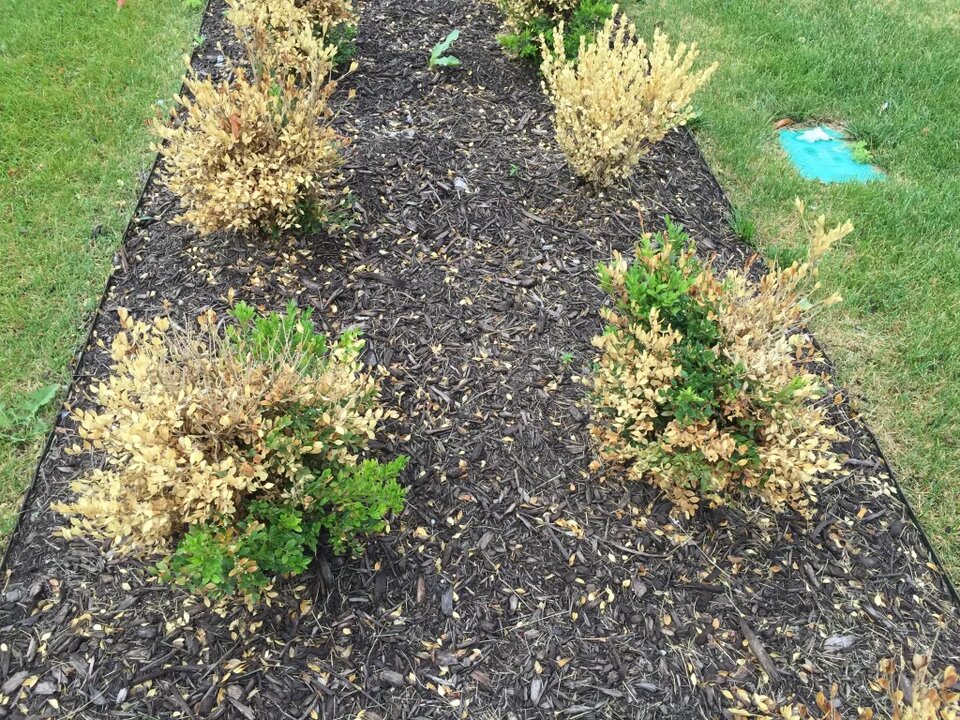
The most visible type of damage is browning and drying of the foliage of plants that are supposed to be green in winter such as boxwood, holly, euonymous and arborvitae. The causal factor for these plants is excessive wind, causing the leaves to lose moisture and desiccate. Much of this damage can be limited by planting them in areas of the landscape that are naturally shielded by fences, houses or other plants. Another step is to apply an anti-desiccant product several times over winter to create a waxy barrier on the leaves. They should be applied on days above 32 degrees F at times when a few hours remain in the day so that they can dry on the leaf. Read and follow all label directions, especially when it comes to clearing out the internal product delivery tube. This foliage damage is shown in the photo above.
Prevent Trunk Damage
Sometimes not visible until spring, critters such as rabbits, mice and voles that nibble on the soft trunk tissues of newly planted trees and shrubs can cause significant injury. Most gardeners don’t worry about the looks of this damage, but once they realize that the conductive vessels of the plant are rendered non-functional by the chewing, they become very concerned. The best way to deal with this type of trunk damage is to “head it off at the pass” so to speak, preventing it in the first place. This is best done with a protective guard, either a solid column of white PVC drain tile or a cylinder of wire mesh. These materials can be purchased from hardware stores or full-service nurseries. Installing them soon after Thanksgiving is a good protection practice; removing them in early April is suggested to allow the trunk to develop normally in the landscape.
Prevent Turf Damage
Since the leaves/blades of grass plants will drop off just like oak and maple trees and new ones will regrow from the crown in spring, our attention is focused on the permanent parts of the plant. In terms of trees, those parts are the stems and buds, whereas in turf, the permanent parts are crowns and roots. When lawns are frozen and gardeners walk across them to access various parts of the landscape, they can be injured by crushing the crowns and roots. Again, preventing the damage is the best course of action. The best that homeowners can do is to simply avoid walking across the lawn if at all possible, or at least varying the direction of travel to the extent that is feasible.
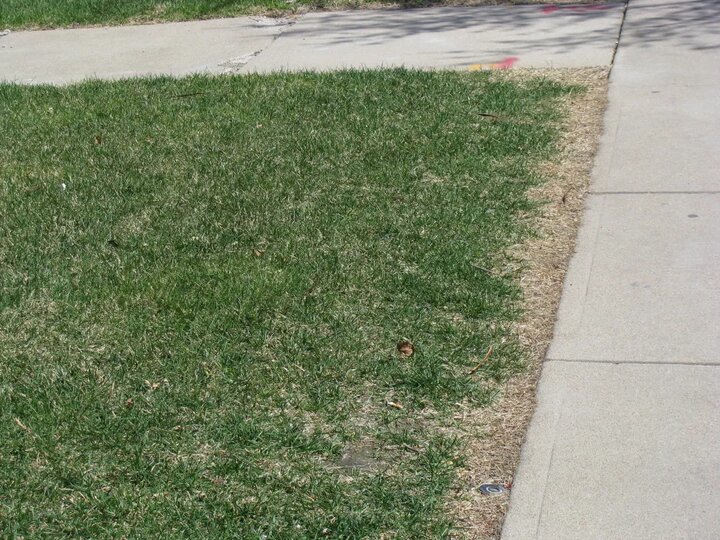
Lawns and other plants near driveways and sidewalks are often injured by the overapplication of ice melt products. These agents are useful for clearing the paths of frozen water that can cause slipping and human injuries (certainly a worthwhile purpose), but when applied in excess, can burn the turf and nearby ornamentals by overloading the plant tissues with salt, thus dehydrating them. Several chemicals are commonly used for this purpose, each with varying degrees of potential damage to landscape plants. The ones that are most injurious are sodium chloride and potassium chloride. Calcium chloride usually causes less damage to plants and is effective at ice removal. Calcium magnesium acetate (CMA) offers the least potential for plant damage but is usually the most expensive material. In many situations, several of these ingredients are blended together to obtain the intended result with limited negative effects.
This article was reviewed by Nicole Stoner