Agricultural Irrigation

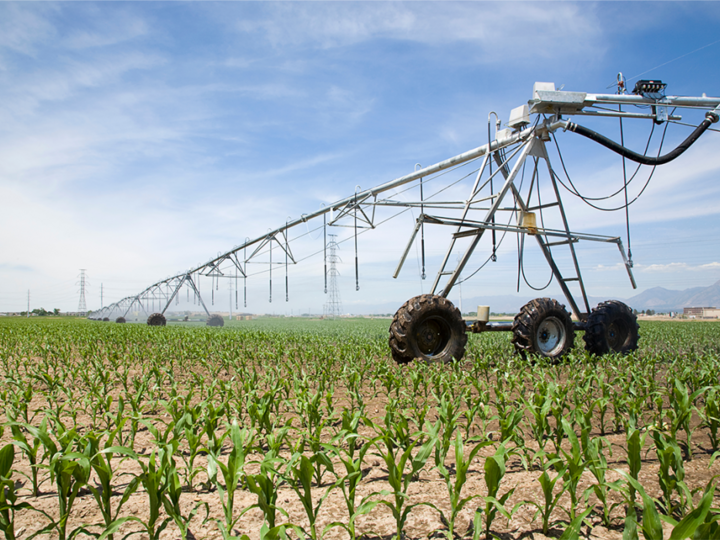
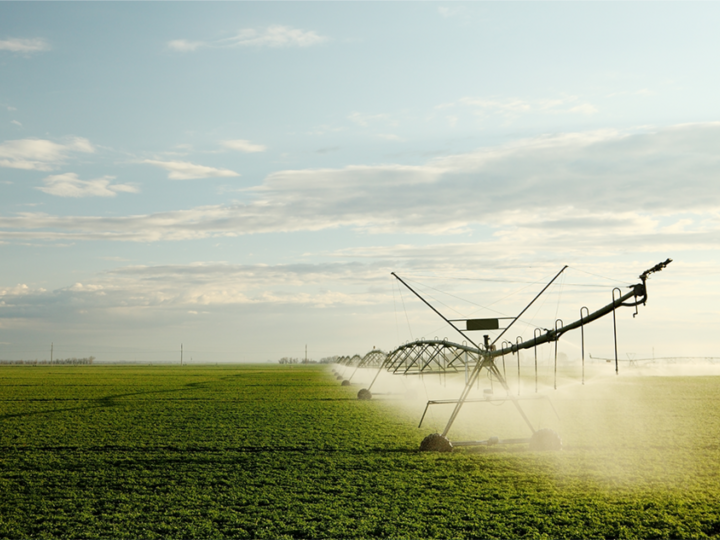
Agricultural water users can optimize water use efficiency and protect the quality of water resources by applying basic information about irrigation systems, crop water use and management practices.

 Water for Food Conference to Address Water and Food Security in a Changing World

Water for Food Conference to Address Water and Food Security in a Changing World

This year's conference will focus on innovative ways to improve water and food security by increasing farmers’ resiliency to a changing landscape.
 Pasture and Forage Minute: Early Season Alfalfa Irrigation, Trigger Dates and Weed Control

Pasture and Forage Minute: Early Season Alfalfa Irrigation, Trigger Dates and Weed Control

This week — Strategies for irrigating alfalfa in early season dry soil conditions, grazing to control abundant weed growth due to drought and forming a drought plan.
New Whitepaper Explores the Connection between Soil Health and Water Quality

New Whitepaper Explores the Connection between Soil Health and Water Quality

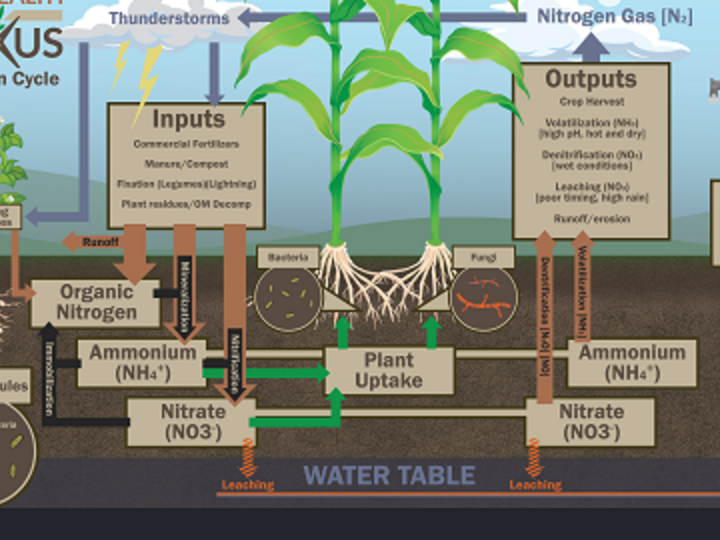
The Soil Health Nexus is excited to debut two new resources on the Soil Health Toolbox! Two Soil Health Nexus members, Francisco Arriaga, Associate Professor and Extension Specialist at the University of Wisconsin-Madison, and Anna Cates, Assistant Professor and State Soil Health Specialist at the University of Minnesota, recently published a long-awaited whitepaper exploring the connection between soil health and water quality.
Estimated Crop Water Use for June 5-11, 2023

Estimated Crop Water Use for June 5-11, 2023

Estimated Crop Water Use for June 5-11, 2023
Study Reviews Farmer Irrigation Scheduling Tendencies in Dry Years

Study Reviews Farmer Irrigation Scheduling Tendencies in Dry Years

Study Reviews Farmer Irrigation Scheduling Tendencies in Dry Years.
Early Season Irrigation During Drought

Early Season Irrigation During Drought

In a dry spring like 2025, early irrigation may be needed — but applying too much water too soon risks losing nitrogen and rainfall storage. Learn how soil moisture monitoring and timing can protect yields and inputs.
Estimated Crop Water Use for June 19-25, 2023

Estimated Crop Water Use for June 19-25, 2023

The estimated crop water use for Nebraska Panhandle crops for the previous week and the upcoming week is shown in this table. It is based on data gathered and calculations made by Gary Stone, Nebraska Extension educator, and Dr. Xin Qiao, extension irrigation and water management specialist, both based at the UNL Panhandle Research and Extension Center in Scottsbluff.
Drought-stressed Crops and Yield Potential

Drought-stressed Crops and Yield Potential

Drought-stressed Crops and Yield Potential
How to Determine the Chemigation Injection Pump Setting for a Center Pivot with the End Gun Off and On

How to Determine the Chemigation Injection Pump Setting for a Center Pivot with the End Gun Off and On

The key to knowing the correct setting for a chemigation pump is to first determine how many acres per hour the pivot will cover at the desired irrigation application depth or rate.
Irrigation Scheduling Application to Conserve Water Resources

Irrigation Scheduling Application to Conserve Water Resources

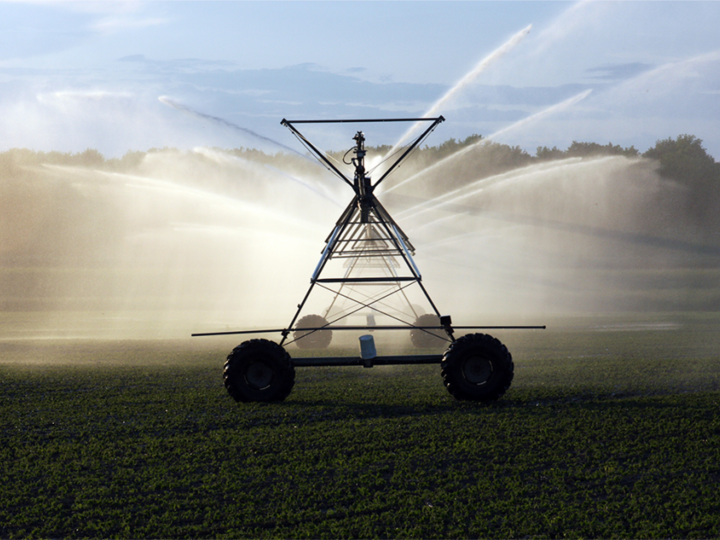
Agriculture today is not what it was a decade ago. We are at an interesting pace of agricultural technological innovation and development in sensors, controls, robotics and technology, including irrigation scheduling applications. The declining quantity and quality of freshwater resources in many parts of the world, including the United States, imposes significant challenges for producers, managers, advisors and decision-makers to produce more yield with less water. It is necessary to promote sound management strategies to improve irrigation efficiency and conserve water resources. By using irrigation scheduling applications, producers can make more informed decisions that can lead to higher yields with fewer irrigation inputs. Nebraska is one of the top states that produces maize under different irrigation methods, in third place after Iowa and Illinois. The total irrigated area in Nebraska reaches about 9.3 million acres. More than 85% of the total irrigation areas use the center pivot irrigation system, while about 15% is covered by furrow irrigation and less than 1% is managed by subsurface drip irrigation systems (see fig. 1). A new irrigation scheduling application is being developed to improve irrigation scheduling that can have a substantial impact in using limited water supplies more effectively and increase yield per unit applied of irrigation water and sustain agricultural productivity. At the request of Irriga Global, Lutry, Switzerland, a field test was initiated for the 2022 growing season on maize fields to evaluate the irrigation scheduling application in one of the Irrigation Today.
Optimize Those Last Few Irrigations

Optimize Those Last Few Irrigations

Scheduling the last few irrigations of the season deserves extra attention because the goal is not only to focus on keeping the crop wet enough to produce optimal yields, but also on using up stored soil water. Leaving the field a little drier at the end of the season will save irrigation costs, decrease leaching losses, improve soil conditions for harvest traffic, and save water for future years. Growers also don't want to miss out on capturing off-season precipitation.
Irrigation Season to End in September

Irrigation Season to End in September

A review of this year's irrigation season in the Panhandle and crop water use expectations for Aug. 28-Sept. 3.

Agricultural water users can optimize water use efficiency and protect the quality of water resources by applying basic information about irrigation systems, crop water use and management practices.