Groundwater

Groundwater is vital to the “Good Life” in Nebraska. It maintains our agricultural economy, supplies water to streams and lakes, and provides drinking water to municipalities and rural households. Nebraskans pump groundwater out of the High Plains aquifer and many other aquifers across the state. The vast majority of groundwater is used for agricultural production.

Introducing New Bazile Groundwater Management Area Extension Educator

Introducing New Bazile Groundwater Management Area Extension Educator

Please welcome Jeremy Milander to Nebraska Extension. Jeremy will assume his new role as an Assistant Extension Educator in mid-April and will have specific responsibilities in the Bazile Water Management Area in northeast Nebraska. He will work with four Natural Resources Districts to develop an educational program aimed at stabilizing the nitrate concentration in ground water. Jeremy will also work with a stakeholder group to implement field demonstrations funded by a Nebraska Environmental Trust grant.
Groundwater Protection: It's up to Everyone

Groundwater Protection: It's up to Everyone

Groundwater Protection: It’s Up to Everyone  If you think about the water cycle, you begin to realize the water we use every day, is in essence, recycled. There’s no new water, we are drinking some of the same water the dinosaurs drank! Keeping our drinking water sources safe begins with each of us. There are many things everyone can do to assist with groundwater protection whether you live in an urban or rural area.

No-till, Cover Crops, And Planned Grazing Systems Workshop to be held in Norfolk February 12th

If you are interested in learning more about Soil Health, Cover Crops and Nitrogen Management consider attending the No-till cover crops grazing workshop held by the Bazile Groundwater Management Area, Lower Elkhorn Natural Resource District and the NRCS in Norfolk at the Lifelong Learning Center. The workshop will run from 9:00 a.m. to 3:30 p.m. with lunch provided by the Bazile Groundwater Area NRDs.
Nebraska Groundwater Levels Rise Following Wet Year

Nebraska Groundwater Levels Rise Following Wet Year

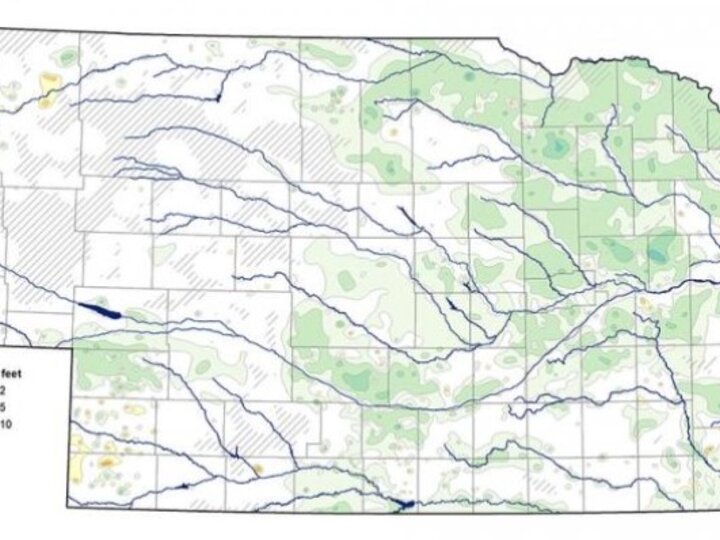
Groundwater levels across much of Nebraska continue to rebound from the historic 2012 drought, according to the 2019 Groundwater-Level Monitoring Report. On average, wells measured in spring 2019 saw a 2.63-foot increase in groundwater levels statewide.
Small communities pay high costs for clean water

Small communities pay high costs for clean water

In Nebraska, 85% of our citizens rely on drinking water pumped from the ground. When a community's public drinking water supply is affected by high nitrate levels that exceed 10 ppm, it can cost hundreds of thousands - even millions - of dollars to fix.
Naturally Occurring Elements in Nebraska’s Groundwater: Part 1 of a Series - Calcium and Magnesium

Naturally Occurring Elements in Nebraska’s Groundwater: Part 1 of a Series - Calcium and Magnesium

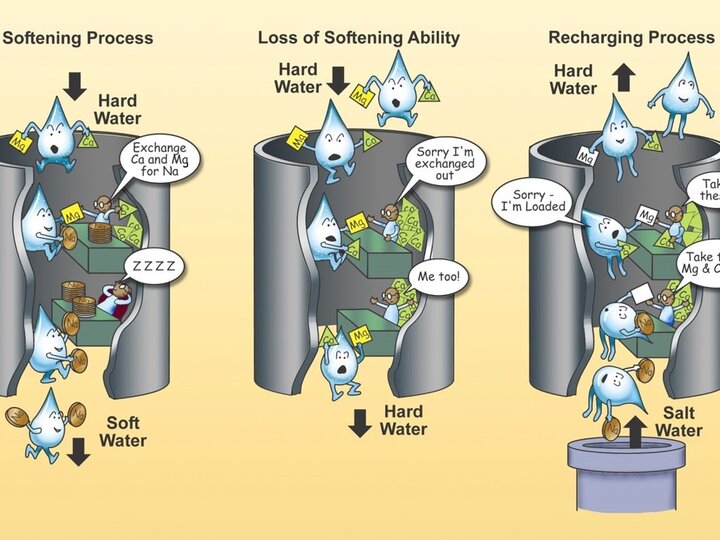
Caption:  A simple overview of how the water softening process works. As hard water enters the water softener, it filters through a resin that is supersaturated with a sodium (Na) brine. The calcium (Ca) and magnesium (Mg) in the hard water attach to the resin beads and are exchanged for sodium (Na), thus making soft water for use throughout the home. Over time, the exchange resin becomes saturated with Ca and Mg and has to be regenerated with the Na brine solution so an effective water softening process can continue. (Graphic by Nebraska Extension)

Naturally Occurring Elements in Groundwater Part 2 of a Series — Iron and Manganese

There are naturally occurring elements and minerals within Nebraska’s geology, and with that, it is not uncommon to find them in Nebraska’s groundwater. Calcium, magnesium, iron, manganese, fluoride, arsenic, and uranium are among the elements found in Nebraska. This month, the spotlight series continues with iron and manganese. Iron & Manganese

Naturally Occurring Elements in Groundwater - Part 3 of a Series - Fluoride

There are naturally occurring elements and minerals within Nebraska geology, and with that, it is not uncommon to find them in Nebraska’s groundwater. This month, the spotlight series continues with fluoride.

Naturally Occurring Contaminants – Part 4 of a Series – Arsenic

There are naturally occurring elements and minerals within Nebraska geology, and with that, it is not uncommon to find them in Nebraska’s groundwater. This month the Spotlight Series will continue with Arsenic. Arsenic
Dietary Strategies to Reduce Nitrogen and Phosphorus Excretion in Feedlot Cattle

Dietary Strategies to Reduce Nitrogen and Phosphorus Excretion in Feedlot Cattle

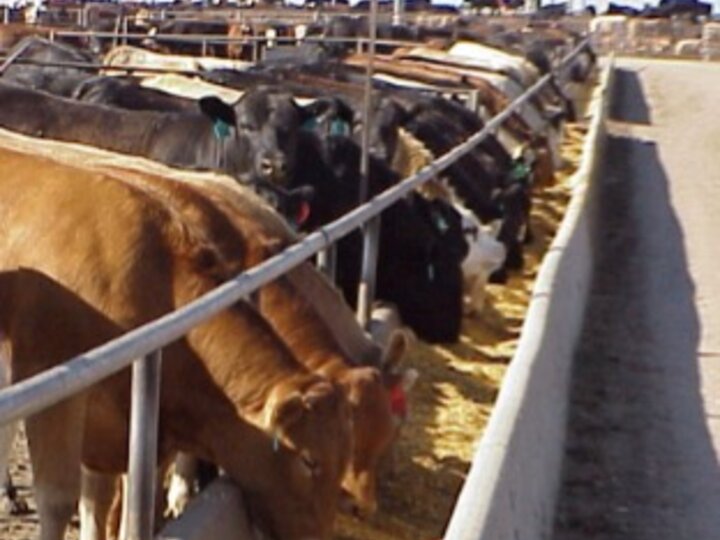
Dietary nutrients, specifically nitrogen and phosphorus, are excreted in manure from feedlot cattle. Dietary strategies, including calculated protein supplementation and phase-feeding programs, can be implemented by cattle feeders to decrease nutrient excretion and improve nutritional efficiency of the animal.
Protecting Groundwater by Managing Animal Manure Products

Protecting Groundwater by Managing Animal Manure Products

Groundwater is often the main source of drinking water for rural communities, especially in the Midwestern United States, so it is important to keep that water at levels that are safe to drink while minimizing environmental impacts. Although animal manure has many benefits to farmers, it can contaminate groundwater supply if not managed properly. This article discusses important considerations when storing and applying manure and includes requirements for testing of well water.
Naturally Occurring Elements in Groundwater Last in a Series - Uranium

Naturally Occurring Elements in Groundwater Last in a Series - Uranium

There are naturally occurring elements and minerals within Nebraska geology, and with that, it is not uncommon to find them in Nebraska’s groundwater. The final installment of the Spotlight Series is Uranium. Uranium

Groundwater is vital to the “Good Life” in Nebraska. It maintains our agricultural economy, supplies water to streams and lakes, and provides drinking water to municipalities and rural households. Nebraskans pump groundwater out of the High Plains aquifer and many other aquifers across the state. The vast majority of groundwater is used for agricultural production.