Water News Archive

Winter Protection for Landscape Plants

Winter Protection for Landscape Plants

Winter can be a harsh time for a Nebraska landscape plant.  Cold temperatures, winter winds and fluctuations in conditions and cause many of them to be damaged.  Fortunately, there are a few steps that can be taken to limit the injury. The specific actions depend largely on the plant involved.
The North American Manure Expo is Coming to Nebraska in July

The North American Manure Expo is Coming to Nebraska in July

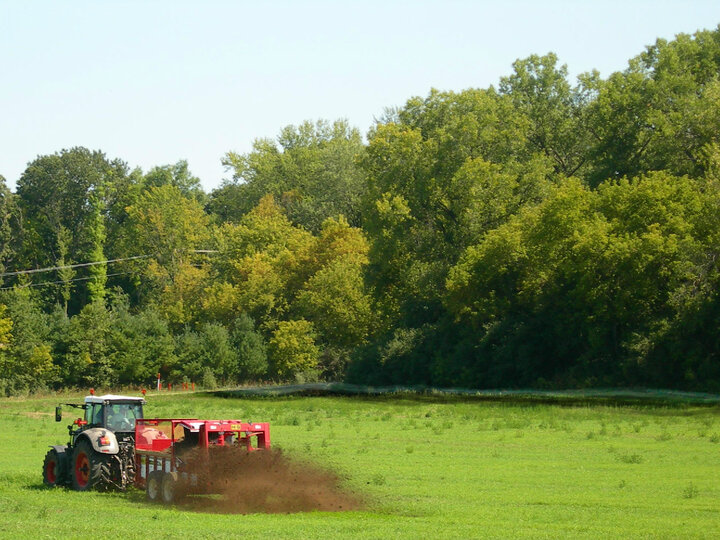
A national manure management event is headed to Nebraska, bringing hands-on demos and national expertise right to producers’ backyard.
Minimizing Contamination of Winter Runoff

Minimizing Contamination of Winter Runoff

Often, we do not think of snow and ice as potential stormwater runoff, but they definitely are. With increasing warm spells throughout the winter causing multiple freeze-thaw cycles where the snow and ice begin to melt and shrink, winter precipitation acts as rain does, picking up and transporting contaminants from sidewalks, driveways, rooftops, roads, parking lots and agricultural fields. Ice melt salt, pet/animal waste, fertilizers, vehicle exhaust/oils/ fluids and litter are some of the common contaminants picked up as ice and snow melt away.

Nebraska Water Facts

Nebraska means “flat water” from the Omaha Sioux “ni braska” and Oto “ni brathge”/ Nebraskier describing the Platte River. The Platte River was named by early French explorers, also meaning “flat.” The Panhandle is almost 6.5 times higher elevation than the Southeast. (5,424 ft above sea level versus 840 ft). Southeast NE receives 2.5 times as much annual precipitation as the Panhandle (average 33” versus 13”).
Register for 2026 Nebraska Master Irrigator discussions

Register for 2026 Nebraska Master Irrigator discussions

Join us for this opportunity to dig deeper and 'talk

Nebraska Workshops Show How Manure Can Boost Yields, Cut Costs, and Protect the Environment

Nebraska Workshops Show How Manure Can Boost Yields, Cut Costs, and Protect the Environment

This February and March, Nebraska Extension is hosting seven hands-on workshops across the state to help producers get the most value out of manure while protecting water and soil resources.
Pesticide Applicator Certification Training in 2026

Pesticide Applicator Certification Training in 2026

Private, commercial and non-commercial pesticide applicators seeking first-time certification or recertification will have several options from which to choose in 2026. Whether you prefer to learn directly from local experts or from the comfort of your own home, Nebraska Extension has you covered.
Chemigation Certification Training in 2026

Chemigation Certification Training in 2026

Nebraska Extension will offer face-to-face and online chemigation certification and recertification training for producers in 2026.
Minimizing Contamination of Winter Stormwater Runoff for Homeowners

Minimizing Contamination of Winter Stormwater Runoff for Homeowners

Often, we do not think of snow and ice as potential stormwater runoff, but they definitely are. With increasing warm spells throughout the winter causing multiple freeze-thaw cycles where the snow and ice begin to melt and shrink, winter precipitation acts as rain does, picking up and transporting contaminants from sidewalks, driveways, rooftops, roads, parking lots, and agricultural fields. Ice melt salt, pet/animal waste, fertilizers, vehicle exhaust/oils/fluids, and litter are some of the common contaminants picked up as ice and snow melt away.

Problematic frozen pipes can be prevented with routine, prewinter maintenance

Problematic frozen pipes can be prevented with routine, prewinter maintenance

Winter is on its way which means it is time to assess and insulate the pipes in your home’s crawl spaces and attic. Both plastic and copper pipes can freeze, and frozen water pipes affect folks who live in both cold and warmer climates. By conducting routine preventative maintenance, one can greatly reduce the risk of potentially expensive damage that frozen water pipes can cause.

Houseplant Survival Guide for Winter

Houseplant Survival Guide for Winter

It can be cold and dreary in Nebraska in winter and most people want some green around to fight off the winter blues.  November brings on a whole new set of growing conditions for our tropical houseplants indoors, both for ones that have been brought indoors after a summer outside as well as those that are year-round fixtures inside.  For winter success, consider these 5 factors.

Order Your 2026 Nutrient Recordkeeping Calendars!

Order Your 2026 Nutrient Recordkeeping Calendars!

The 2026 Nutrient Management Calendars are available for pre-order from the Nebraska Extension. This easy-to-use record keeping calendar tracks manure-related records for livestock and cropping operations. It serves as a guide for livestock operations that are required by the State of Nebraska to keep records. It was designed to be used by all sizes of livestock operations and includes all records required for operations permitted for the National Pollutant Discharge Elimination System (NPDES).
Well & Septic Owner’s Check List

Well & Septic Owner’s Check List

Well & Septic Owner’s Check List

💧Inspect your wellhead and area around it in the fall and spring. Perform maintenance as necessary: 

What You Need to Know About Having a Well Drilled

What You Need to Know About Having a Well Drilled

Those residences that are not served by a public water or rural water system need a source of water for both consumption and daily needs. A private well most often fulfills these needs. While the cost of drilling a well is a lesser expense in the overall purchase or building of a home, it is a necessary expense to provide the residence with a useable water supply and it adds value to the property.

Reviewing Your Water Needs

Livestock Facility Inspections: Do I need one? If so, what should I expect?

Inspections collect information about livestock facilities and are how the Nebraska Department of Environment and Energy (NDEE) determines whether the facility is in compliance with regulations. There are two different kinds of inspections for livestock operations. Initial inspections help NDEE determine whether a permit is needed. Routine inspections allow the NDEE representative to make sure permitted operations are in compliance with their permit.
Calculating the Value of Nutrients in Manure

Calculating the Value of Nutrients in Manure

“How much is this manure worth?” This is a common question from both livestock farmers who are supplying manure and crop farmers who are utilizing it. To answer this question, it is important to understand the difference between gross value and net value. The gross value of manure reflects the equivalent commercial fertilizer value of the nutrients contained in the manure. The net value considers the impacts of application method, transportation, and cropping system nutrient needs as well as intrinsic values that are much more difficult to put a number on. Therefore, this article will focus on determining the gross value of nutrients in manure.
Practical Manure Management Tips for Small Farms: Protecting Water, Soil, and Community

Practical Manure Management Tips for Small Farms: Protecting Water, Soil, and Community

Small farms play a vital role in food production, environmental stewardship, and rural communities. But small farms can also have big negative impacts on their neighbors if they are not managing their nutrients, animals, or soil in ways that protect local air and water quality. Fortunately, with good planning and practical tools, even resource-limited farms can manage manure effectively and protect water and soil quality while reducing odor and improving fertilizer value.
Flushing Products Other Than Toilet Paper Can Cause Big Problems Down the Line

Flushing Products Other Than Toilet Paper Can Cause Big Problems Down the Line

With SepticSmart Week 2025 coming up the week of September 15-19, there is no time like the present to have a “Flushing 101” review. Whether you live in a rural area and have your own personal onsite wastewater system or your house is connected to a municipal wastewater system, everyone needs to be conscious of what we flush down the toilet. Regardless of what type of wastewater system your home is hooked up to, minimizing solids in our wastewater will improve the overall system performance. 

What’s in Your Manure? Keeping Plastic and Other Junk Out of Your Fields

What’s in Your Manure? Keeping Plastic and Other Junk Out of Your Fields

If you've ever looked out over a freshly fertilized field and noticed a tangle of net wrap or a bit of old plastic poking out of the soil, you're not alone. Recent work on my own farm reminded me of something that might be bugging you too: finding plastic and other junk in livestock manure and worse, seeing it show up in the field.
Pasture and Forage Minute: Silage Inoculants, Fall Armyworms, and Managing Stock Tank Algae

Pasture and Forage Minute: Silage Inoculants, Fall Armyworms, and Managing Stock Tank Algae

From improving corn silage quality to preventing pasture pests and algae-filled water tanks, this week’s Pasture and Forage Minute offers practical tips to protect your forages and livestock.